
How Baidu ERNIE Chooses Citations for Hong Kong Websites
Updated on: 30 July 2026
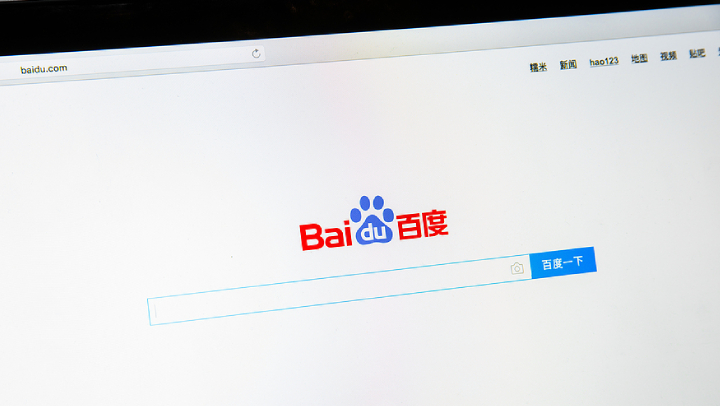
Hong Kong businesses have spent years perfecting their Google presence, and rightly so. But there’s a second search engine sitting right on the doorstep of the mainland market, and it plays by an entirely different set of rules. Baidu doesn’t just show blue links anymore. Increasingly, it opens with an AI-generated answer built by ERNIE, Baidu’s knowledge-enhanced language model, and that answer only cites the sources ERNIE trusts.
This creates a strange problem for Hong Kong brands. A website can rank comfortably on Google, load fast for local visitors, and still be completely absent from ERNIE’s citations. The reason isn’t content quality in the way most marketers think about it. It comes down to two things: can Baiduspider actually reach and understand the page, and does the brand have a footprint inside Baidu’s own knowledge ecosystem. Neither of those happens by accident.
ERNIE Isn’t Just Baidu Search With Extra Steps
ERNIE, short for Enhanced Representation through Knowledge Integration, was built by pairing a huge text corpus with a large-scale knowledge graph, and that knowledge graph is what separates it from a typical search index. Baidu Search now places an AI-generated answer block above the traditional results for a large share of query types, similar to how Google AI Overviews work, and each claim in that answer sits beside a small source chip a user can tap to check where the information came from.
Those chips are the citations. Getting into them means ERNIE has decided a source is reliable enough to ground a factual answer. Getting left out means the brand simply doesn’t exist in that conversation, even if it ranks on page one of ordinary Baidu search results below the AI block.
Where ERNIE Actually Pulls Its Answers From
ERNIE’s grounding sources skew heavily towards Chinese-language platforms that Baidu already owns or trusts, including Baidu Baike, Baidu Wenku, Baijiahao publisher accounts, and official government or enterprise sites. Western-built sites are comparatively underrepresented unless the content has been mirrored, translated, or otherwise made legible to Baidu’s crawler in a format it already favours.
This is where a lot of Hong Kong companies find themselves surviving the click drop tied to how Baidu ERNIE chooses citations without ever understanding why it happened, because the assumption that good Google SEO automatically transfers over simply doesn’t hold. A separate index means separate rules for what counts as trustworthy.
A few of the recurring gaps to check for:
- Server location and CDN routing, since Baiduspider crawls more thoroughly when latency to mainland users is low
- txt rules that unintentionally block or throttle Baiduspider while allowing Googlebot through
- ICP filing status, which determines if a domain is treated as a legitimate mainland-facing property at all
- Page load speed specifically as Baiduspider measures it, which is not the same measurement Google uses
- Simplified Chinese content depth, rather than a thin translated layer sitting over English pages
None of these are content problems. They’re plumbing problems, and they tend to sit far below where a marketing team usually looks.
The ICP Filing Question Hong Kong Companies Keep Asking
A common question from Hong Kong businesses is whether they need an ICP filing at all, and the short answer is no. ICP registration is only mandatory when a website’s server sits physically inside mainland China, and hosting from Hong Kong, Singapore, or anywhere else outside the mainland avoids that requirement entirely. The trade-off is that traffic from mainland users still has to cross the Great Firewall, and Baidu’s crawler experiences the same latency any mainland visitor would.
For a brand serious about mainland-facing visibility, that latency is often the deciding factor in whether Baiduspider crawls deeply or gives up after a shallow pass. A site can be perfectly legal and still be functionally invisible to the crawler that decides citation eligibility.
Claiming a Baidu Baike Entry Is the Real Foundation
If ICP and hosting are the plumbing, Baidu Baike is closer to the front door. It functions as the Baidu ecosystem’s answer to Wikipedia, and because ERNIE’s knowledge graph draws directly from it, a well-populated Baike entry becomes one of the strongest trust signals a brand can build. An accurate, properly sourced Baike page tells ERNIE that a business exists, does what it says it does, and has verifiable facts attached to its name.
Getting a page approved on Baike is closer to a mainland Wikipedia edit process than a paid directory listing. It needs neutral tone, cited sources, and a track record that Baidu’s reviewers can independently verify, which usually means a business needs some existing footprint in Chinese-language media before an entry will be accepted. Getting that order wrong is a common trap: brands that try to claim a Baike page before they have any citable coverage elsewhere tend to get rejected on the first attempt.
Alongside Baike, Baijiahao articles and mentions on platforms like Zhihu act as supporting evidence, giving ERNIE additional independent confirmation of the same facts rather than relying on a brand’s own website as the sole source.
Why This Can’t Be Left for Later
Google has essentially no presence inside mainland China, which makes Baidu’s AI-generated answers the single most consequential AI search channel for anyone targeting Chinese-language audiences from Hong Kong. A brand that treats this as a future project rather than a current one is choosing to stay invisible in the exact channel where its mainland customers are already looking for answers.
The technical fixes (crawlability, hosting, ICP status) and the ecosystem fixes (Baike, Baijiahao, Zhihu presence) work together rather than separately. Sorting out one without the other tends to produce a site that’s technically reachable but has nothing citable to show, or a beautifully written Baike entry sitting behind a site Baiduspider barely visits.
Getting both sides right takes a fair amount of coordination between technical SEO and Chinese-language content strategy, and much of Hong Kong’s growth is now tied to the mainland’s digital channels, which makes this exactly the kind of bridge Impossible Marketing was built to provide for Hong Kong and Greater China-facing businesses. If your website is ready to stop guessing and start showing up in ERNIE’s citations, get in touch with Impossible Marketing to see where your current setup stands.