
Claude AI Watermarks: What Changed and Why It Matters
Updated on: 14 August 2026
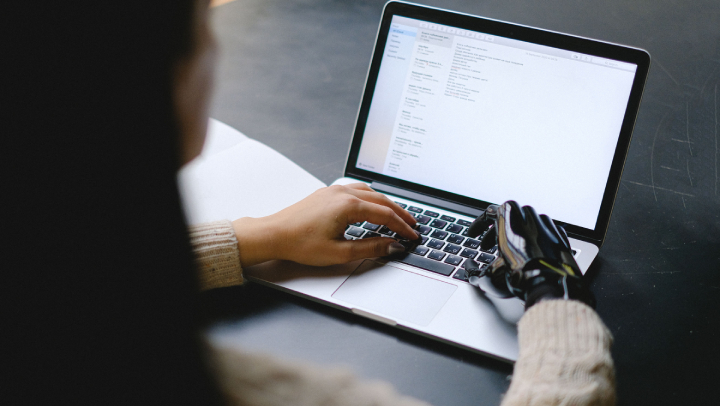
If you have used Claude to help draft an email, brainstorm a campaign, or polish a report recently, there is now an invisible signature sitting inside that text. Anthropic, the company behind Claude, has started embedding hidden watermarks in the content its AI models generate. The change rolled out quietly at first, but it has since sparked plenty of conversation among marketers and businesses who rely on AI tools every day.
Hong Kong businesses have picked up AI adoption quickly across content and marketing work, so this update is one to understand properly. It affects how AI-generated content is identified, what that means for transparency, and how teams might need to rethink parts of their workflow.
What exactly changed
Anthropic confirmed that Claude models launched on or after 2 August 2026 now embed invisible watermarks in generated text, along with signed provenance metadata attached to files such as images or documents. The watermark is not something you can see or notice while reading. It works by subtly influencing word choices in a way that becomes statistically detectable across a large enough sample of text, without changing how the content reads or feels to a human.
This applies across the board. It covers the API, the Claude app, Claude Code, and Claude Cowork, all under the same marking system. Anthropic has also said it is working to bring this capability to older Claude models, though that rollout has not been completed yet. The update arrived shortly after the Claude Sonnet 5 launch, adding another layer of change for teams still adjusting to newer model versions.
Why Anthropic made this move
The main driver here is regulation, specifically the European Union’s AI Act and its Transparency Code, which came into effect on 2 August 2026. The code requires AI companies to label AI-generated or AI-edited content in ways that other systems can recognise. Anthropic is not alone in this. Other major players, including Google and OpenAI, have made similar commitments.
What makes this significant for businesses outside Europe is that Anthropic chose not to limit the watermarking to EU users. It applies globally, with no opt-out available, regardless of where you or your business are based. So even if your team is working entirely within Hong Kong, the same invisible marking sits inside your Claude-generated content.
How the watermark actually behaves
A few practical details matter here for anyone producing content regularly:
- The watermark travels with the text when it is copied and pasted elsewhere, though it may not survive heavy editing or paraphrasing.
- It applies to generated text specifically, while files such as images carry separate provenance metadata using the C2PA standard, an open system already used by several major tech companies for content authenticity.
- Anthropic has said a detection tool for outside use is coming, though it has not yet published details on accuracy or how disputes over flagged content would be handled.
- The model itself does not know it is applying a watermark. It is a background process rather than something built into Claude’s own awareness of its output.
Industry commentators have also pointed out real limitations. Developers, for instance, have noted that reformatted code or content run through additional editing tools may lose the watermark entirely, which raises questions about how reliable detection will actually be in practice.
What this means for content teams
For anyone producing content professionally, from blog articles to marketing copy and client-facing documents, this update raises a few genuine considerations.
The first is around disclosure. As AI tools become part of everyday content production, questions about transparency are becoming harder to avoid, particularly for regulated industries such as finance, education, or healthcare. Hong Kong’s own regulatory environment reflects this shift too. The Privacy Commissioner for Personal Data has been actively reviewing how local businesses handle AI, and recent guidance has pushed companies to make their use of AI clearer within privacy statements and internal policies. A separate mid-year review of AI regulation across Singapore and Hong Kong noted growing emphasis on practical governance measures, including assurance and sector-specific oversight, rather than sweeping new laws.
The second consideration is more operational. If a piece of writing is drafted with AI assistance and then heavily edited by a human, there is a real possibility that automated detection tools could still flag it, even where the final result reflects substantial human input. Until Anthropic publishes clearer guidance on accuracy and dispute processes, businesses may want to be cautious about relying too heavily on detection results as a final word on authorship.
None of this means AI tools should be avoided. It simply means that content workflows benefit from a clear understanding of where AI assistance fits, how much human oversight goes into the final product, and how that process might be explained if ever questioned.
A practical way to think about it
| Consideration | What businesses should do |
| Transparency | Keep internal notes on where AI tools are used in content production |
| Client communication | Be upfront where relevant, particularly for regulated sectors |
| Editing process | Maintain genuine human review rather than light surface edits |
| Detection tools | Treat results as one signal, not a definitive verdict, until standards mature |
Final thoughts
AI watermarking is still a new and evolving space, and Claude’s update is just one part of a much wider shift happening across the industry. For businesses in Hong Kong, staying informed about these changes counts less towards compliance alone and more towards maintaining trust with clients and audiences who increasingly want to know how content is made.
If your business needs support navigating AI-driven content strategy, SEO, or GEO in Hong Kong, Impossible Marketing works as a bridge between Hong Kong and Singapore, helping businesses build content strategies that stay effective and ready for what comes next. Get in touch with our team to see how we can help your brand adapt with confidence.