
Beyond SEO: Why GEO Matters for Businesses After Google I/O 2026
Updated on: 3 June 2026
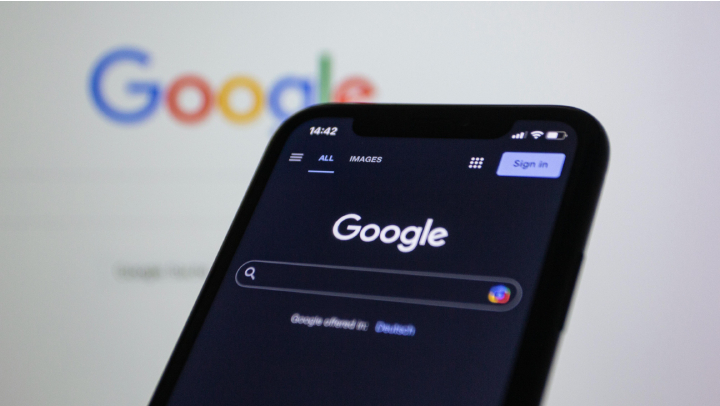
If you have not heard about what happened at Google I/O on 19 May 2026, now is a good time to pay attention. Sundar Pichai announced the biggest change to Google Search in over 25 years, and the ripple effects are already reaching businesses in Hong Kong and Singapore. AI Mode is now the global default. The familiar search bar has been rebuilt around conversational AI. And the traditional list of blue links that businesses have spent years optimising for? It is no longer the main event.
For businesses in Hong Kong, and for Singapore companies with eyes on the HK and China markets, this is not just another algorithm update to note and move on from. It is a fundamental shift in how customers find you, trust you, and decide to contact you. If your digital strategy is still built entirely around SEO, it is time to understand what comes next: Generative Engine Optimisation, or GEO.
What exactly is GEO?
GEO is the practice of optimising your content so that AI-powered platforms, including Google’s AI Mode, ChatGPT, Perplexity, and Gemini, actually cite your business when they generate answers for users. Traditional SEO gets you ranked in search results. GEO gets you recommended inside AI responses. Those are two very different things.
The distinction matters more than ever now. Think about how your own customers search today. Increasingly, they are not typing a query and scanning ten links. They are asking an AI a direct question and reading the answer it generates. If your business is not cited in that answer, you simply do not appear.
Why Google I/O 2026 Changes Things for HK Businesses
Before May 2026, GEO was something forward-thinking marketers were watching. After May 2026, it is something every business needs to act on.
Based on the Google I/O 2026 Search announcement, AI Mode has exceeded one billion monthly users, with query volume more than doubling each quarter since its debut. Google’s VP of Search, Liz Reid, described the new intelligent search box as “the biggest upgrade to our iconic search box since its debut over 25 years ago.” The search bar itself, unchanged for decades, has now been rebuilt around Gemini 3.5 Flash and accepts text, images, files, and entire browser tabs as input.
For marketers, this creates an immediate practical challenge. When Google’s AI synthesises an answer, it draws from sources it deems authoritative and well-structured. Ranking number one in organic search no longer guarantees you appear in the response a user actually sees. The Google I/O 2026 announcements also confirmed the rollout of persistent “information agents” that monitor the web on behalf of users around the clock, delivering synthesised briefings without any search required. Your brand either features in those briefings or it does not.
GEO Does Not Replace SEO—It Builds On It
This is an important point that gets lost in the noise around AI search. GEO is not a replacement for the SEO work you have already done. It is the next layer on top of it.
AI systems tend to draw from content that already has strong organic authority. Good technical SEO, including clean site structure, fast load times, and proper indexing, remains the foundation. If you have been building quality content and refining the basics, like best practices for SEO titles and meta descriptions, that work puts you in a stronger position to layer GEO on top. The businesses that will struggle are those that have relied on thin or repetitive content, because AI systems actively favour authoritative, well-structured information over generic filler.
What GEO Actually Looks Like in Practice
So what does optimising for GEO involve? It is less technical and more editorial than you might expect. Here are the core shifts worth making:
- Write to answer questions directly. AI systems favour content that clearly and concisely responds to real user questions. If someone asks “Which Hong Kong clinics offer aesthetic treatments for Singapore patients?”, your content should answer that precisely, not dance around it.
- Add data, citations, and expert perspectives. A peer-reviewed GEO study found that GEO optimisation strategies can boost content visibility in AI-generated responses by up to 40%. Content that is structured, substantive, and easy for AI systems to parse performs significantly better than generic filler.
- Use structured data markup. Schema markup helps AI systems understand the context of your content, including what your business does, where you are located, and what questions you answer. It is one of the most practical and cost-effective technical steps you can take right now.
- Build presence across multiple platforms. Your Google Business Profile, LinkedIn page, industry directories, and local listings all contribute to the trust signals AI systems rely on when deciding what to cite.
- Keep content fresh. AI systems prioritise recency. A page that has not been substantially updated in two years is at a real disadvantage compared to one that is regularly refreshed with current information.
The Opportunity Hiding in The Disruption
It would be easy to read all of this as bad news: fewer clicks, less traffic, more complexity. But there is a genuine upside worth considering.
The people finding your business through AI search are not casually browsing. They have asked a specific question, received a synthesised answer, and your business was the one recommended. They arrive with far more context and intent than someone who randomly clicked a link from page two of Google. That kind of traffic is harder to earn, but significantly more valuable when you do.
There is also a window of opportunity here that will not stay open forever. Most businesses have not yet built a GEO strategy, which means early movers have a real chance to establish themselves as the sources AI systems learn to trust and consistently recommend. That advantage compounds over time, making it much harder for competitors to catch up later.
What This Means for Singapore Businesses Looking at HK and China
Here at Impossible Marketing, we are based in Singapore and have spent years building deep expertise in the Hong Kong and China digital markets. The GEO conversation looks meaningfully different depending on which market you are operating in.
In Hong Kong, Google AI Mode is the primary shift to adapt to. The English and Traditional Chinese content strategies needed for GEO are well within reach for businesses operating across the Singapore-HK corridor. In mainland China, the picture is different again. Baidu has rebuilt its entire search experience around AI, and platforms like DeepSeek, Kimi, and Doubao are increasingly shaping how consumers research and decide. Optimising for AI visibility in China requires a different approach entirely, one rooted in Mandarin-language content authority, Baijiahao, Zhihu, and WeChat Official Accounts, rather than schema markup and Google Business Profiles.
Whether you are a Singapore business looking to expand into HK, or a HK brand trying to reach Singaporean customers, understanding how AI search works in each market is now a prerequisite, not an afterthought.
The Time To Adapt Is Now
Google I/O 2026 was not a warning shot. It was the starting gun. The question for HK and Singapore businesses is a straightforward one: are you optimising to be found, or are you optimising to be recommended? In 2026, those are two very different things, and only one of them is keeping pace with where search is heading.
Impossible Marketing is a Singapore-based digital marketing agency with specialist expertise in the Hong Kong and China markets. We help businesses on both sides of the corridor build digital strategies that work across borders. Get in touch to find out how we can help your business navigate AI search.